Replica: A Handwritten Font for Creative Projects
There I was, staring at a blank brand board, trying to figure out how to bring a new café’s personality to life. The client wanted something warm, approachable, and just a little bit quirky. After a few rounds of sketches and mood boards, I landed on a simple concept: a handwritten font that felt like it had been written by someone with a steady hand and a love for detail. That’s when I discovered Replica.
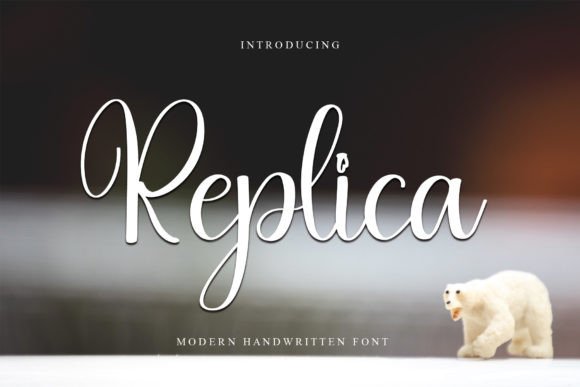
Replica is a neat and beautiful handwritten font that carries an elegant touch. It’s not just any script—it has a distinct personality that feels both timeless and modern. The curves are soft but confident, and the overall structure gives off a sense of refinement without being too formal. It’s the kind of font that makes you want to write a note or add a personal touch to every design.
Testing Replica on a logo draft was the first step. I started with a basic text layout, playing with different sizes and spacing. What stood out immediately was how well it balanced legibility with style. Even in smaller sizes, the details held up, which is crucial for things like business cards or product labels. It didn’t feel like a gimmick—it felt like a real typeface with purpose.
As I moved into packaging design, Replica proved its versatility. Whether it was a coffee bag, a sticker label, or a menu board, the font maintained its character without overpowering the design. It worked well as a headline font, drawing attention while still feeling inviting. For a small café, that’s exactly what you want—something that catches the eye but doesn’t scream for attention.
I also used Replica in social media graphics and website headers. On a homepage hero section, it added a personal, authentic feel that aligned with the café’s brand story. In Instagram posts, it helped create a cohesive visual language across different platforms. The font’s fluidity made it easy to pair with other elements, whether it was a bold sans serif for body text or a subtle serif for a more traditional look.
One thing I noticed was how Replica handled different weights and styles. The font came with a range of options, from light to bold, which gave me flexibility in creating visual hierarchy. For instance, using a lighter weight for subheadings and a bolder version for headlines helped guide the viewer’s eye naturally through the design. It also made it easier to maintain consistency across multiple materials, from printed menus to digital banners.
When working with clients, I always recommend testing a font before committing to it. Replica was no exception. I created a few mockups—business cards, a shop sign, and a label sticker—and saw how it performed in real-world scenarios. The font looked great on a metal sign, where the contrast between the clean lines and the texture of the material added depth. On a sticker, it felt like it belonged there, adding a handmade quality that resonated with the brand’s aesthetic.
Pairing Replica with other fonts was another area where it shone. I found that it worked well with a simple serif font for body text, creating a balance between the organic feel of the script and the structure of the serif. It also paired nicely with a modern sans serif for a more contemporary look. The key was to let Replica be the star of the show, while the other fonts supported it without competing.
Another practical tip is to check the font’s features before using it in a project. Replica includes alternates and ligatures that can add a unique touch to your designs. These small details can make a big difference, especially when working on high-end branding or packaging. It’s also worth noting that the font supports multiple languages, which is a plus if the brand has international aspirations.
From a technical standpoint, Replica is a premium font that offers a range of file formats, making it easy to integrate into different design workflows. Whether I was working in Adobe Illustrator, Photoshop, or even a web design tool, the font rendered consistently across platforms. This reliability is essential when delivering final assets to clients, ensuring that the design looks the same everywhere it’s used.
Overall, Replica is a versatile and expressive font that fits well into a variety of design projects. Its elegance and clarity make it a strong choice for logos, branding, and editorial work. It’s the kind of font that adds personality without overwhelming the message, which is exactly what a small business needs to stand out in a crowded market.
For designers looking to add a human touch to their work, Replica is a reliable and stylish option. It’s not just a font—it’s a tool that helps tell a brand’s story in a way that feels genuine and thoughtful.